
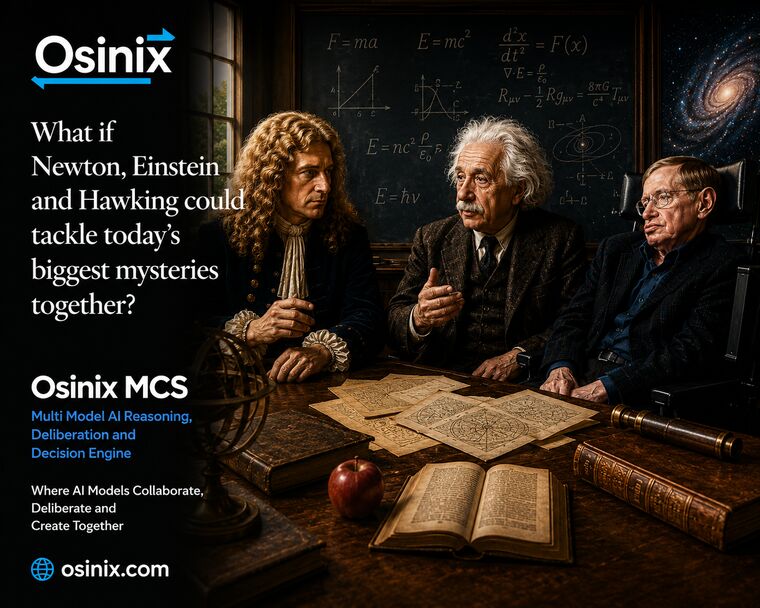
One model gives you one answer. MCS gives you an answer that has been argued, challenged, and defended.

MCS does not sell you models. It runs the ones you already trust.
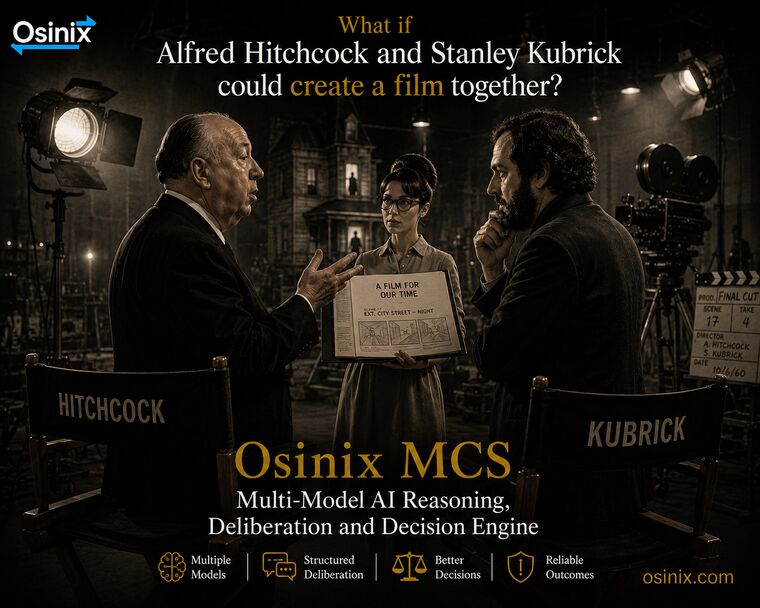
If you build with AI, you have probably reached for an orchestration framework. MCS is a different kind of thing, and for the right problem the difference matters.
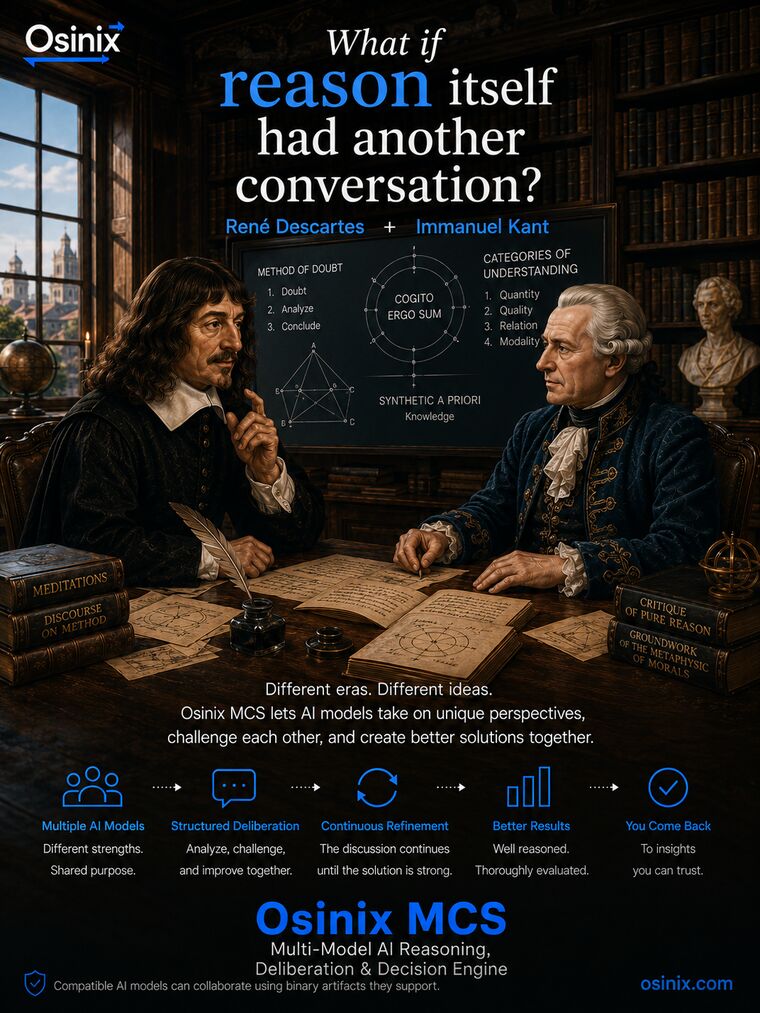
Most AI works the same way: you ask a question, one model answers, and that answer is the result. MCS works differently. It does not take the first answer. It tests it.
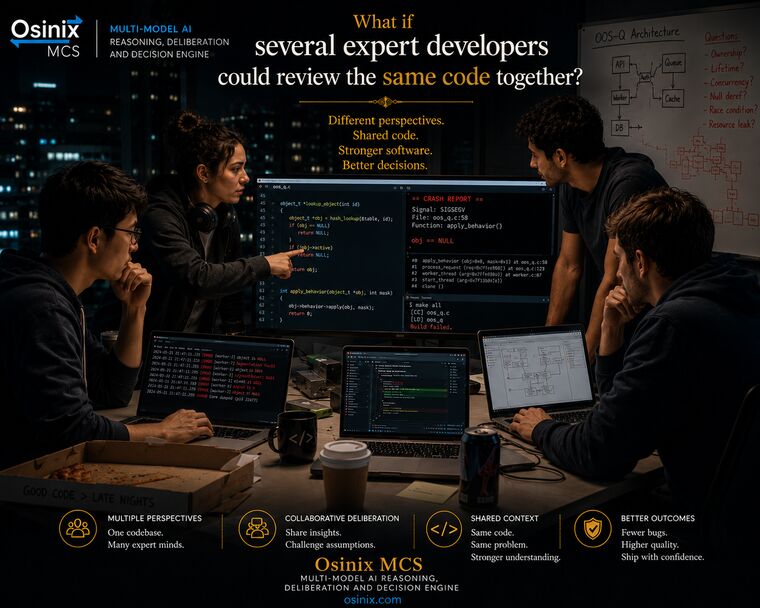
A good team is not one person repeated. Neither is an MCS panel.

Most AI tools treat models as separate islands. You ask one for an image, ask another for a different one, and compare the two. They never actually work on the same thing…
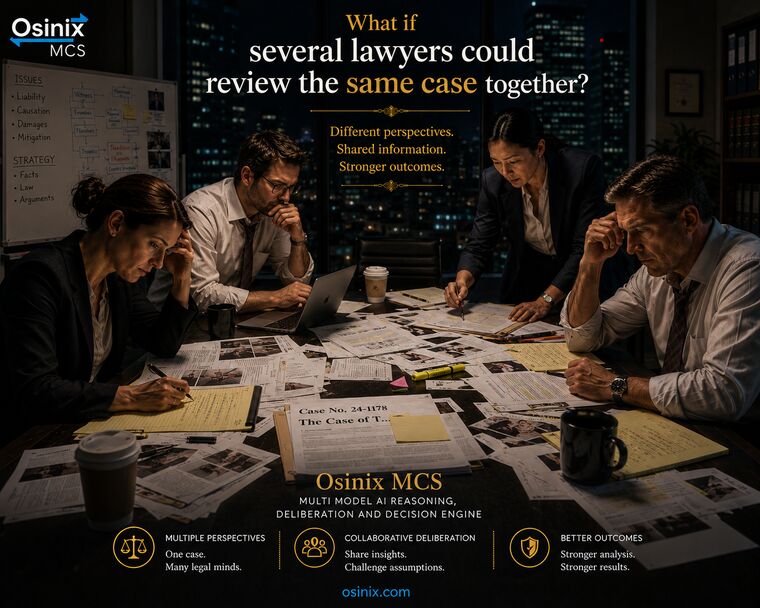
The earlier articles explained the idea behind MCS. This one shows what it looks like on real problems. Each example below is drawn from a demonstration that ships with M…
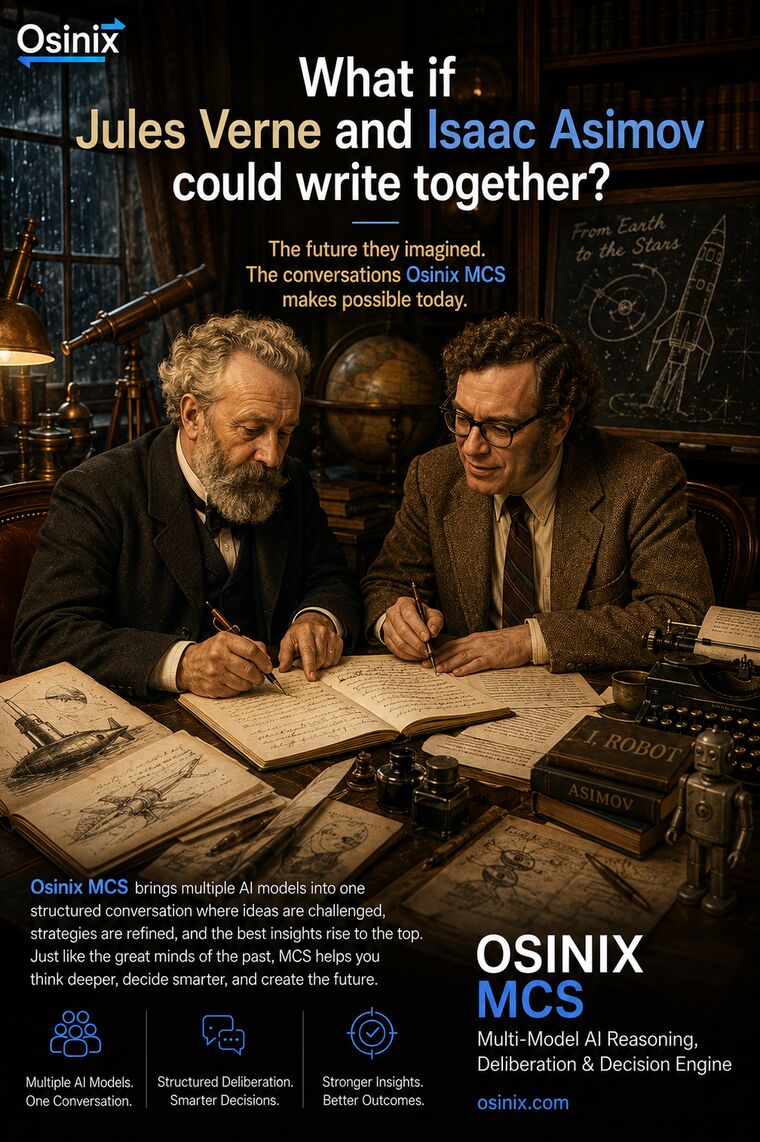
A fast, inexpensive model can produce far better work than it can on its own, if a careful reasoning model is reviewing every step.
Everything MCS does from the app, your own programs can do too.
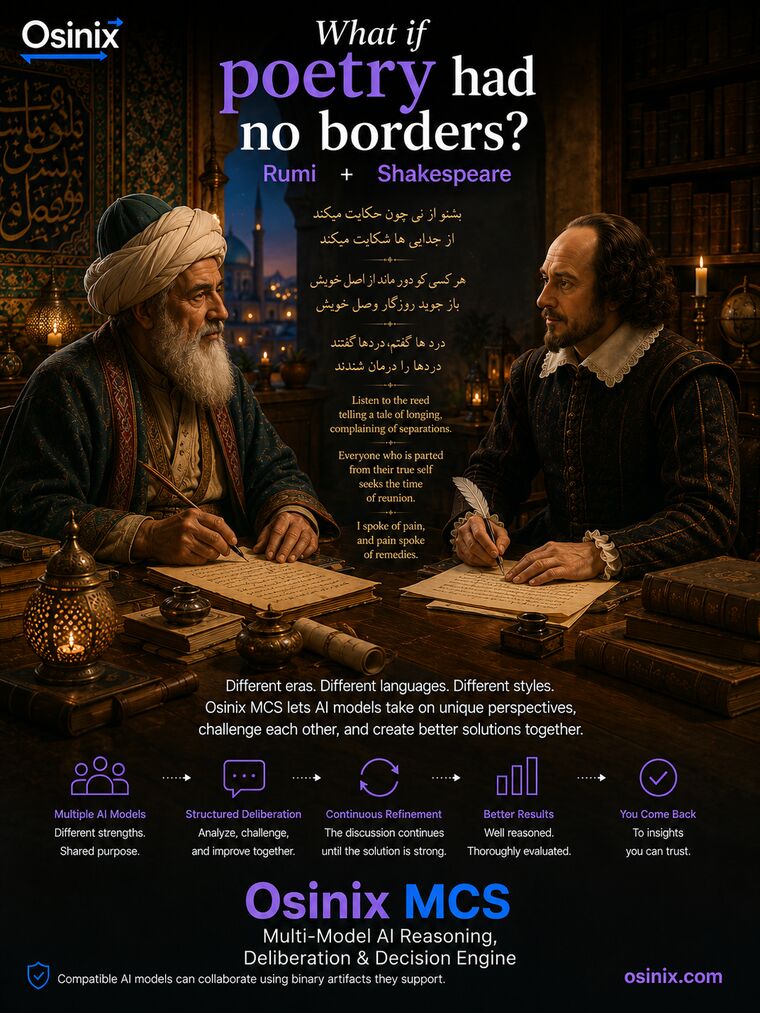
The cost of an AI answer is not the answer. It is what happens when you act on the wrong one.
Regular AI searches in the dark. OOS gives it a flashlight and a map.
OOS is not another AI agent. It is the foundation that makes agents reliable.
Use any AI model. Local or cloud. From a single system.
Cloud, data center, network, or edge device. Same codebase. Same behavior. Same reliability.
How OOS compares to RAG, guardrails, and other AI safety approaches.
Google declared AI wrappers are done. Here is what survives and where OOS fits.
One logical system across machines, networks, and architectures.
The fundamental unit behind the Object Operating System.
Understanding the problem OOS solves and why it matters for AI deployment.