
Why One AI Model Is Not Enough
The cost of an AI answer is not the answer. It is what happens when you act on the wrong one.
The Asymmetry
A model produces a confident answer in seconds, for fractions of a cent. Acting on a wrong one can cost days of rework, a failed audit, a bad diagnosis, or a decision you cannot take back.
That gap is the whole problem. The answer is cheap to generate and expensive to trust. And the model gives you no help telling its solid answers from its shaky ones. It delivers a careful conclusion and a lucky guess in the same confident voice.
When the stakes are low, you live with that. When the stakes are high, you need more than confidence. You need a reason to believe.
Why a Bigger Model Is Not the Fix
The natural instinct is to reach for a larger, smarter model. That helps at the margins, but it does not solve the real issue.
A single model, however large, still gives you a single perspective. It still has blind spots, and asking it again does not reveal them, because the same training produces the same gaps every time. A bigger model can become a more convincing wrong answer, not a safer one.
More compute on one mind does not give you a second opinion. It gives you a louder first one.
Why Deliberation Works
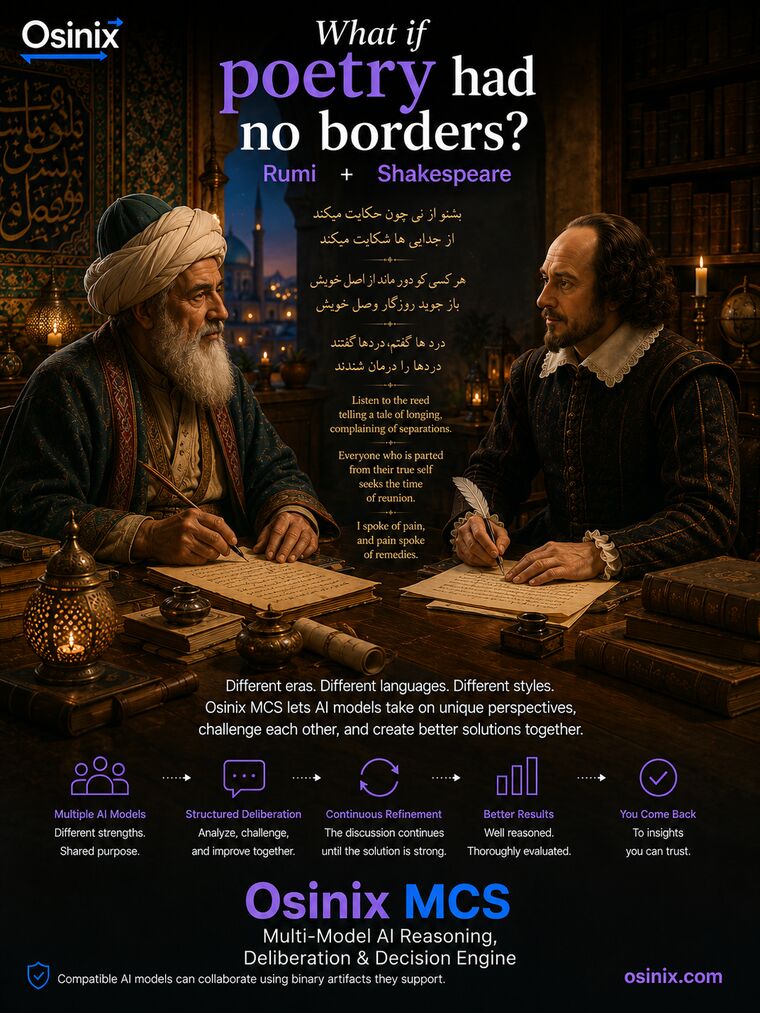
Put several models on the problem together and something changes. They do not just produce more answers. They expose each other's weak reasoning.
When models agree after challenging each other, that agreement means something. When they disagree, the disagreement is information: it shows you exactly where the question is genuinely hard, the place a single model would have hidden under false confidence.
This is how serious human decisions already work. We do not bet the company on one person's first instinct. We put it in front of a room, argue it, and trust the conclusion more because it survived the argument. MCS brings that discipline to AI.
What It Looks Like
Take a wrongful-termination case headed for mediation. Instead of asking one model "should we litigate or settle?", MCS puts a panel on the actual case brief. One associate argues to litigate. Another argues to settle. Each cites specific facts from the brief and presses the other's weak points. A senior moderator follows each round and writes a final strategy memo: the recommended path, the strongest argument against it, and why one outweighs the other.
The output is not "the AI says settle." It is a reasoned recommendation with the opposing case already on the table, the kind of thing you could hand to a partner.
The same pattern carries far beyond law. In a code review, one model hunts for defects while another challenges whether each finding is real, and the result separates what truly must be fixed from what only looks wrong. Different domain, same idea: a conclusion that was tested, not just asserted.
What You Get That You Could Not Before
MCS does not just return a conclusion. It returns a conclusion you can defend.
- You see the reasoning, not just the verdict.
- You see where the models agreed and where they did not.
- You get an answer that earned its confidence by surviving scrutiny, instead of one that simply asserted it.
That is the difference between "the AI said so" and "here is the analysis, here is where it was contested, and here is why this is the answer."
When to Reach for MCS
The rule is simple: use MCS when the cost of being wrong is greater than the cost of deliberation.
For a quick draft or a low-stakes question, one model is fine. For an engineering review before code ships, a legal reading that has to hold up, a question of medical research, or a risk call that moves real money, a single confident opinion is not enough. Those are the moments MCS is built for.
The Bottom Line
MCS is not about getting an answer faster. It is about getting an answer you can stand behind when being wrong is expensive.
One model asks you to trust it. MCS gives you a reason to.
Want to learn more about MCS?